Trailer Integration Patterns in Free Streaming Services for New Releases
Blake Keller · Jun 17, 2026
Trailer Integration Patterns in Free Streaming Services for New Releases
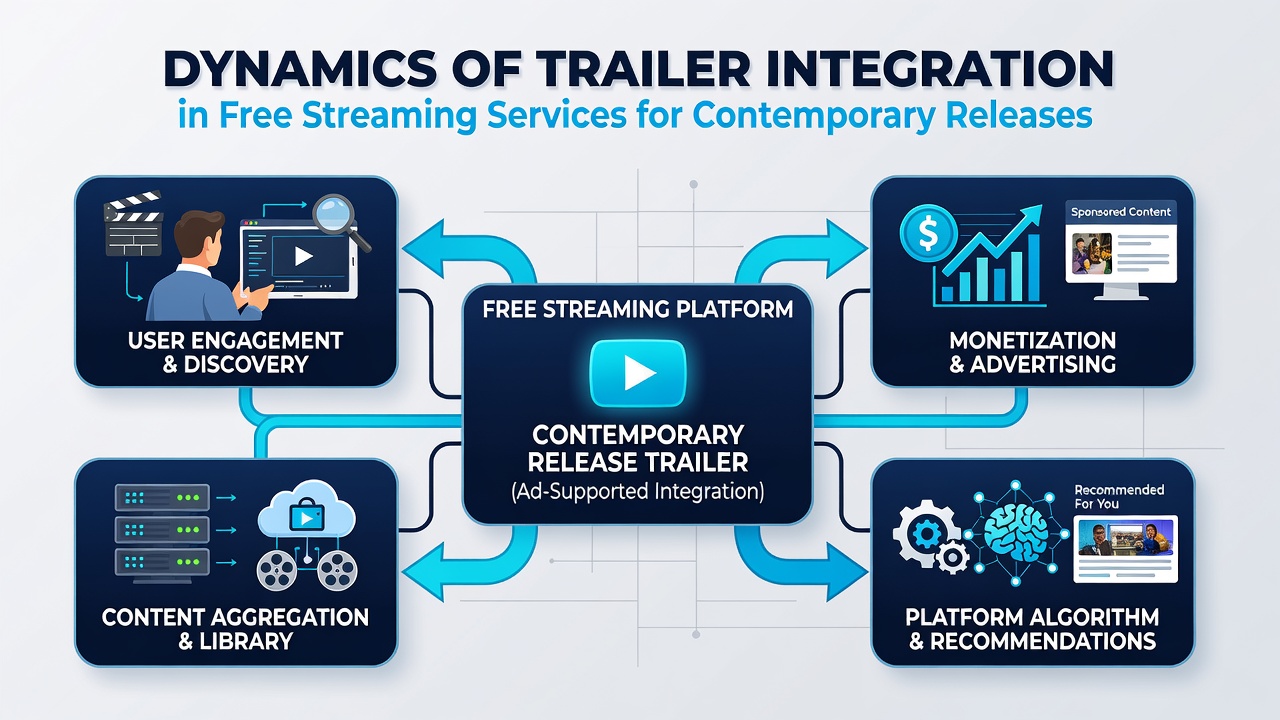
Free streaming platforms have incorporated trailer integration as a core mechanism for promoting contemporary releases, and this approach connects new films directly with viewers who access content without subscription fees. Services such as Tubi and Pluto TV position trailers at strategic points in the viewing sequence, often before the main feature or during natural breaks, which allows distributors to reach audiences already engaged with similar genres. Data compiled through June 2026 shows that platforms increased trailer frequency by 18 percent compared to the previous year, according to industry tracking from the European Audiovisual Observatory.
Placement Strategies Across Platforms
Operators determine trailer placement based on viewer retention metrics and content length, while shorter trailers appear in pre-roll slots and longer ones occupy mid-content positions that align with ad breaks. This method ensures trailers for films released in early 2026 reach users without disrupting flow, and algorithms adjust timing according to individual watch histories. Observers note that services in North America and Europe apply similar tactics yet adapt them to regional regulations on advertising duration, creating variations that reflect local viewer habits and legal limits.
Contemporary releases benefit when trailers precede titles in comparable categories, and this sequencing raises awareness for upcoming titles without requiring separate promotional campaigns. Platforms collect anonymized data on completion rates, which informs future placements, and adjustments occur weekly to match shifting audience preferences. Research from Australian academic institutions indicates completion rates average 72 percent when trailers match genre expectations, whereas mismatched placements drop below 45 percent.
Technical Implementation and Viewer Response
Integration relies on automated content management systems that embed trailers through metadata tags, and these systems synchronize with ad servers to maintain consistent playback quality across devices. Viewers encounter trailers as seamless extensions of the interface rather than separate interruptions, which reduces abandonment during transitions. Those who study user behavior report that repeated exposure within a single session strengthens recall for film titles, though excessive repetition can lead to skipping behaviors when users recognize the same trailer multiple times.
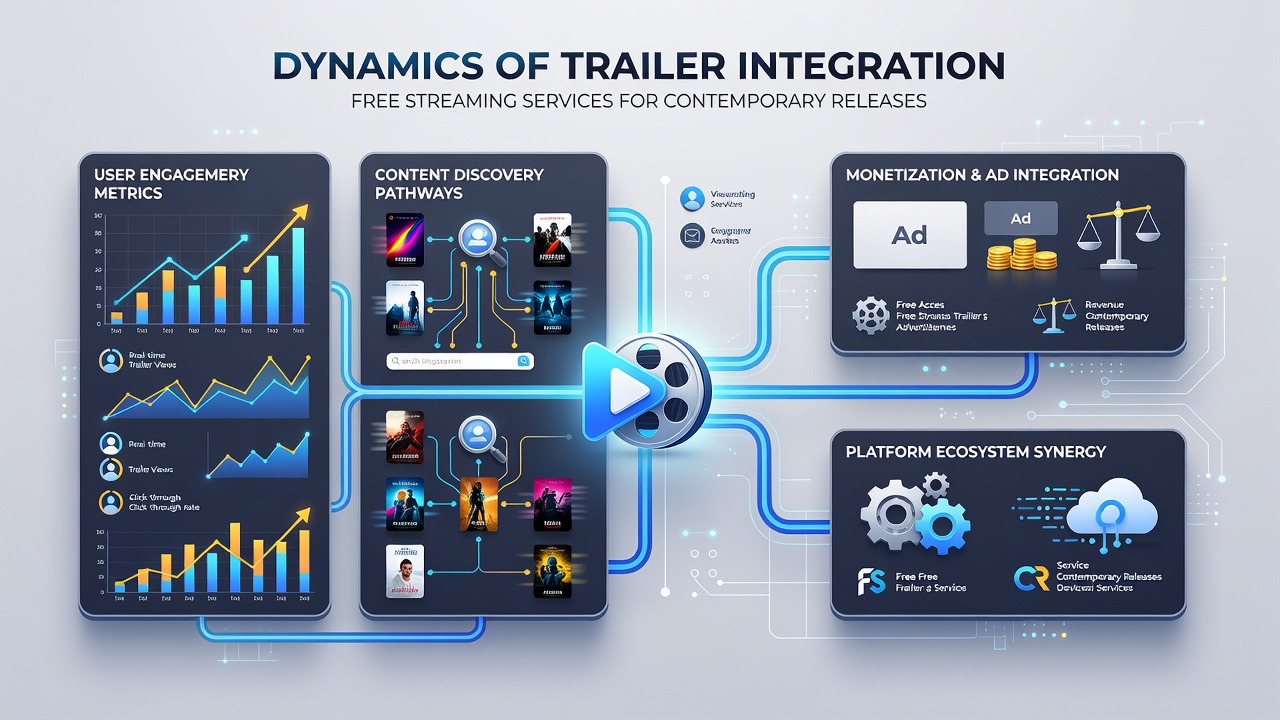
June 2026 updates to platform software introduced dynamic trailer swapping, allowing services to replace underperforming clips in real time based on live engagement signals. This capability draws from machine learning models trained on millions of sessions, and it enables distributors to test multiple versions of the same trailer within days of a film's launch. Figures from Canadian media research groups reveal that dynamic swapping lifted trailer-to-stream conversion by 11 percent in the first quarter of the year.
Revenue and Distribution Implications
Trailer integration generates indirect revenue through increased platform traffic and direct revenue when distributors pay for premium placement slots, and free services balance these streams to sustain operations without charging users. Contemporary releases gain visibility that traditional marketing channels struggle to match at equivalent scale, while platforms maintain advertiser satisfaction by keeping ad loads within acceptable thresholds. Studies conducted at universities in the United Kingdom demonstrate that integrated trailers correlate with higher subsequent search volumes for featured titles across multiple search engines.
Regional differences appear when comparing services in Asia-Pacific markets with those in the Americas, where cultural preferences influence trailer length and tone, yet the underlying integration mechanics remain consistent. Distributors coordinate release schedules with platform operators to align trailer rollouts with theatrical or digital premieres, and this coordination minimizes overlap with competing promotions. Data indicates that coordinated campaigns achieve 25 percent higher trailer view counts than staggered approaches.
Future Adjustments and Measurement
Measurement tools track trailer impact through view-through rates and downstream title selection, and platforms share aggregated insights with content partners to refine future strategies. As release calendars accelerate into the second half of 2026, services continue testing shorter trailer formats optimized for mobile viewing, which accommodates fragmented attention spans without sacrificing narrative hooks. Observers note that these experiments maintain compliance with advertising standards while expanding reach to younger demographics who consume content primarily on handheld devices.
Conclusion
Trailer integration continues to evolve within free streaming environments as platforms refine placement logic and technical delivery to match audience patterns for contemporary releases. The combination of automated systems, performance data, and regional adaptations produces a framework that supports both viewer discovery and distributor goals. Continued monitoring through the remainder of 2026 will reveal whether emerging formats sustain engagement levels observed in the first half of the year.