Technical Protocols for Synchronizing Subtitles in Multilingual Film Archives Serving International Audiences
Dana Butler · Aug 12, 2026
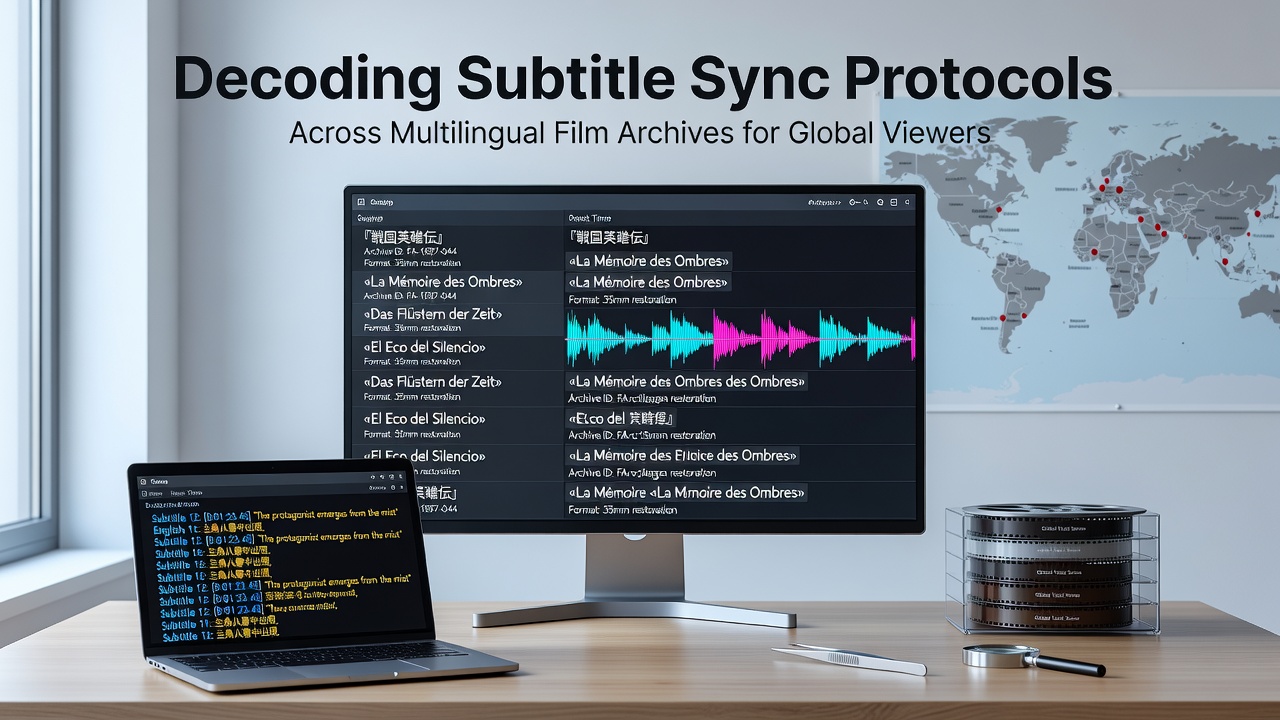
Technical Protocols for Synchronizing Subtitles in Multilingual Film Archives Serving International Audiences
Subtitle synchronization protocols form the backbone of accessible film archives that serve viewers across language barriers, and these systems rely on precise timecode alignment methods developed over decades by preservation specialists. Archives maintain extensive collections where each title carries layered subtitle tracks, and the protocols ensure that text appears in exact sync with audio and visual cues regardless of the source language or target audience. Researchers at institutions handling global film materials have documented how frame rate variations between 24fps, 25fps, and 29.97fps create timing offsets that demand automated correction algorithms, while manual verification remains essential for complex scenes.
Core Timecode Standards and Their Application
Standards such as SMPTE timecode and EBU timecode provide the reference points that subtitle systems use to lock text display to specific frames, and archives convert between these formats when restoring older prints for modern distribution. Data from the International Federation of Film Archives shows that conversion errors occur most frequently during transitions between PAL and NTSC sources, yet dedicated software tools now apply offset calculations to maintain frame-accurate placement. Observers note that right-to-left scripts like Arabic and Hebrew require additional bidirectional text handling layers within the same protocol stack, because standard left-to-right rendering engines can shift character positions by several frames if not properly configured.
Handling Language-Specific Challenges
Multilingual archives face unique demands when processing titles that include both spoken dialogue and on-screen text in multiple scripts simultaneously. Protocols incorporate character encoding standards such as UTF-8 alongside timing metadata, which allows a single master file to generate region-specific subtitle outputs without re-encoding the underlying video. Studies conducted by preservation teams in Australia and Canada reveal that cultural nuances in humor or idiomatic expressions sometimes necessitate timing adjustments beyond literal translation, although core synchronization remains governed by the same technical rules. One case documented by European archivists involved a 1960s French film where rapid-fire dialogue required subtitle compression techniques that preserved readability while adhering to strict display duration limits of two to seven seconds per line.
Automation Tools and Verification Processes
Modern subtitle synchronization relies on speech-to-text alignment engines that match audio waveforms against existing transcripts, then generate time-stamped subtitle events automatically. These tools integrate with archive management systems to flag potential sync drift caused by reel changes or damaged source material, and operators review flagged segments before final approval. According to reports from the National Film and Sound Archive of Australia, automated systems now achieve over 95 percent initial accuracy on standard dialogue tracks, though musical numbers and overlapping speech still require human intervention. The process continues with quality assurance passes that compare rendered subtitles against reference screenings, ensuring global viewers receive consistent timing across platforms.
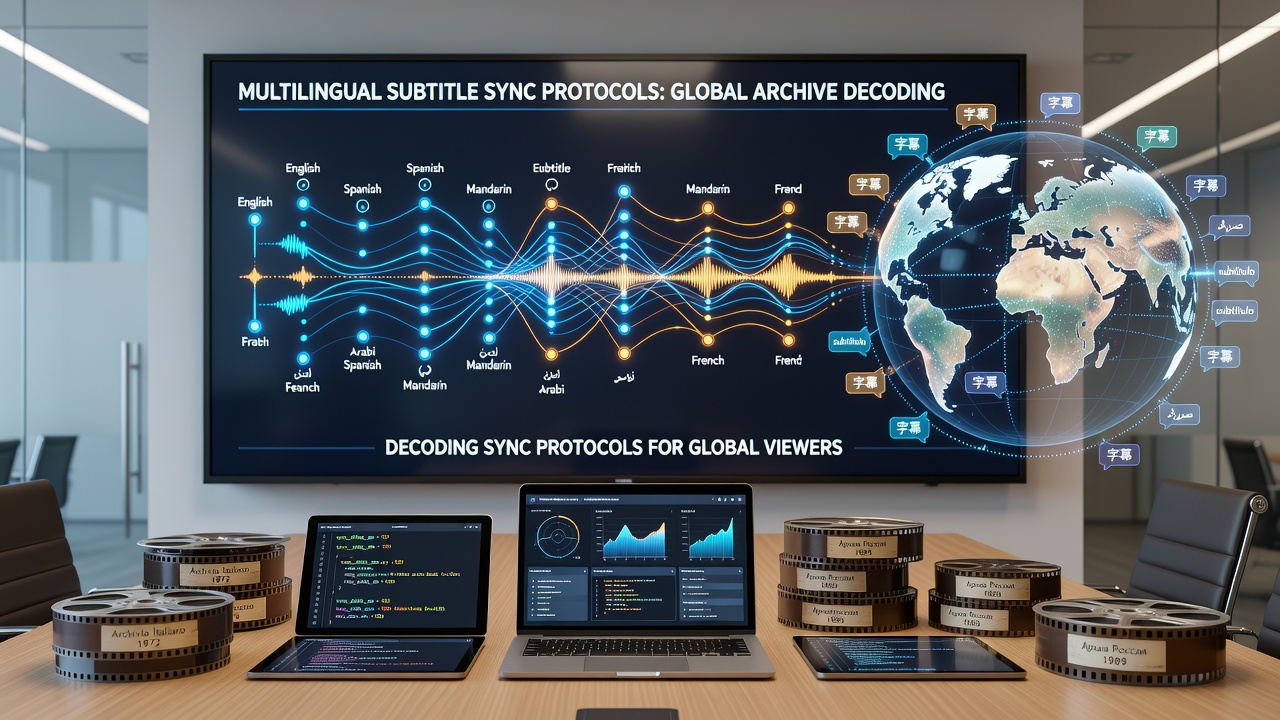
Protocols also address accessibility requirements for deaf and hard-of-hearing audiences by embedding speaker identification tags and sound effect descriptions within the same timed structure. Research published through academic networks in North America and the European Union demonstrates that consistent application of these extended metadata fields improves comprehension rates measurably across test groups. Archives update their synchronization guidelines periodically, and by August 2026 several institutions plan to adopt emerging AI-assisted drift detection that predicts timing shifts before they affect final outputs.
Cross-Platform Delivery Considerations
Global distribution adds another layer because streaming services and physical media players interpret subtitle files differently, and archives generate platform-specific variants from a single master timed file. Protocols include embedded metadata that instructs players on font rendering, positioning, and fallback behaviors when preferred fonts are unavailable. Industry reports indicate that mismatches between container formats like MKV and MP4 can alter subtitle display timing by fractions of a second, prompting archivists to maintain separate verification matrices for each delivery channel. Those who manage large-scale multilingual collections emphasize the importance of maintaining version control logs that track every adjustment made during the synchronization workflow.
Future Developments in Archive Synchronization
Emerging standards focus on machine-readable subtitle graphs that allow dynamic re-timing based on viewer-selected playback speeds, and pilot projects at several national archives test these approaches with positive initial results. Data collected from user sessions shows that synchronized subtitles reduce cognitive load for non-native speakers, although exact performance metrics vary by content genre and language pair. Archivists continue refining these protocols through collaborative working groups that share best practices across continents, ensuring that film heritage remains accessible to international audiences without compromising timing integrity.
Conclusion
Subtitle synchronization protocols in multilingual film archives combine established timecode standards with evolving automation techniques to deliver accurate, accessible viewing experiences worldwide. Continued refinement of these systems supports the growing demand for global access to preserved cinema, and institutions maintain detailed documentation of every protocol update to preserve institutional knowledge for future generations.