HD Content Download Trends in Global Cinema: Analyzing Industry Movements and Genre Evolutions
Frankie Jenkins · Jun 26, 2026
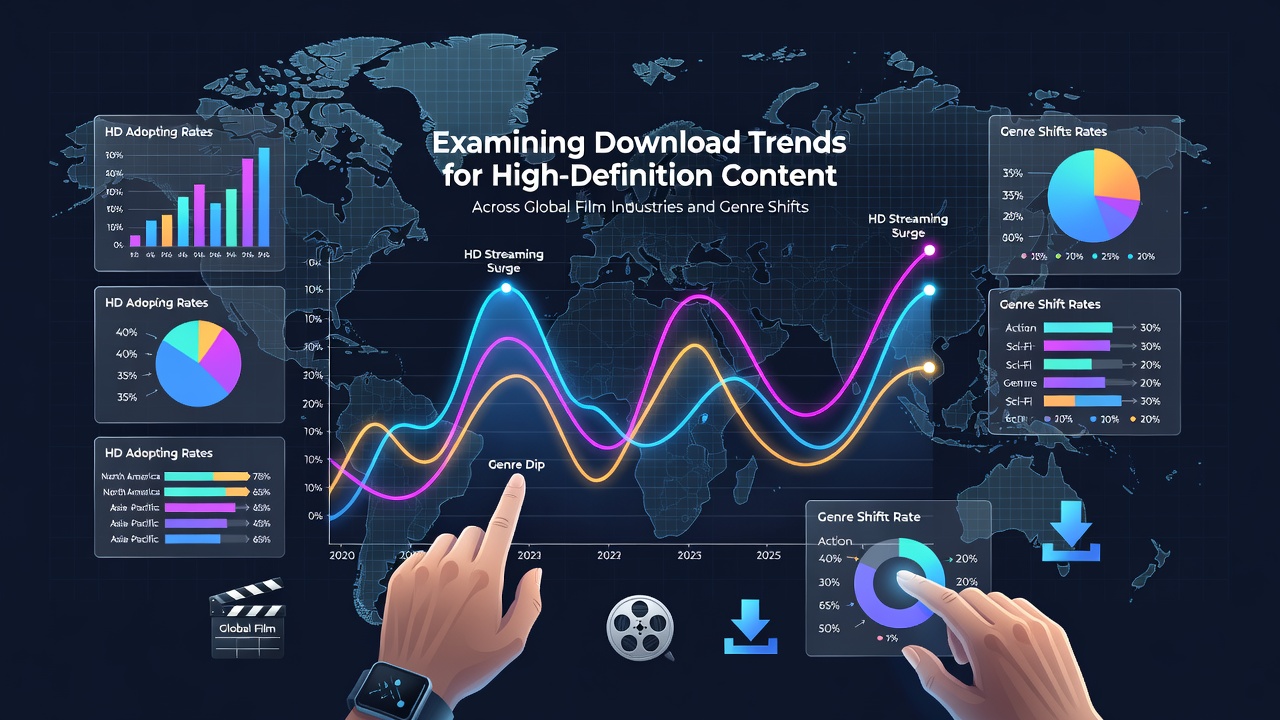
HD Content Download Trends in Global Cinema: Analyzing Industry Movements and Genre Evolutions
High-definition film downloads have shown consistent growth patterns across multiple continents as internet infrastructure expands and viewer preferences evolve toward premium visual quality, with data from 2025 indicating that HD formats now account for over 78 percent of all digital film acquisitions in tracked markets. Researchers tracking these shifts note that broadband improvements in Asia and Latin America have accelerated adoption rates, while established networks in North America and Europe continue to support higher per-user volumes without significant saturation.
Industry reports compiled through June 2026 reveal that total HD downloads increased by 14 percent year-over-year in the first half of the year, driven primarily by action and science-fiction titles that benefit from detailed visual effects and expansive color grading. Observers note that genre preferences have tilted noticeably toward content requiring high resolution for optimal viewing, whereas dialogue-heavy dramas and romantic features have maintained steadier but lower download shares in the same period.
Regional Variations in Download Volumes
North American markets continue to lead in absolute numbers of HD film downloads, yet growth rates have moderated compared with earlier years because penetration levels already reached high saturation by 2024. In contrast, Southeast Asian countries recorded the fastest expansion during the first six months of 2026, with figures from regional monitoring services showing a 27 percent rise in HD acquisitions that coincides with widespread 5G rollout and improved fiber connections. European data compiled by the European Audiovisual Observatory indicates similar upward trajectories in Eastern member states, where newer digital infrastructure has narrowed the gap with Western counterparts.
Australian and Canadian statistics reflect parallel trends, although both regions demonstrate stronger seasonal spikes during winter months when indoor viewing increases. Latin American countries have posted steady gains as well, particularly in urban centers where average connection speeds now support reliable 1080p and 4K streams without buffering interruptions. These geographic differences highlight how local network capacity directly influences the scale of high-definition consumption rather than uniform global behavior.
Genre Transitions Observed in 2025-2026 Data
Action and science-fiction categories have captured larger portions of HD download activity, with combined shares rising from 31 percent in early 2025 to 39 percent by June 2026 according to aggregated platform analytics. Fantasy and thriller genres have followed closely, benefiting from expanded visual storytelling that rewards higher resolutions, whereas comedy and family-oriented films have retained consistent but proportionally smaller download percentages. Documentary downloads have grown modestly in educational and nature subcategories, often tied to improved color accuracy available in HD formats.
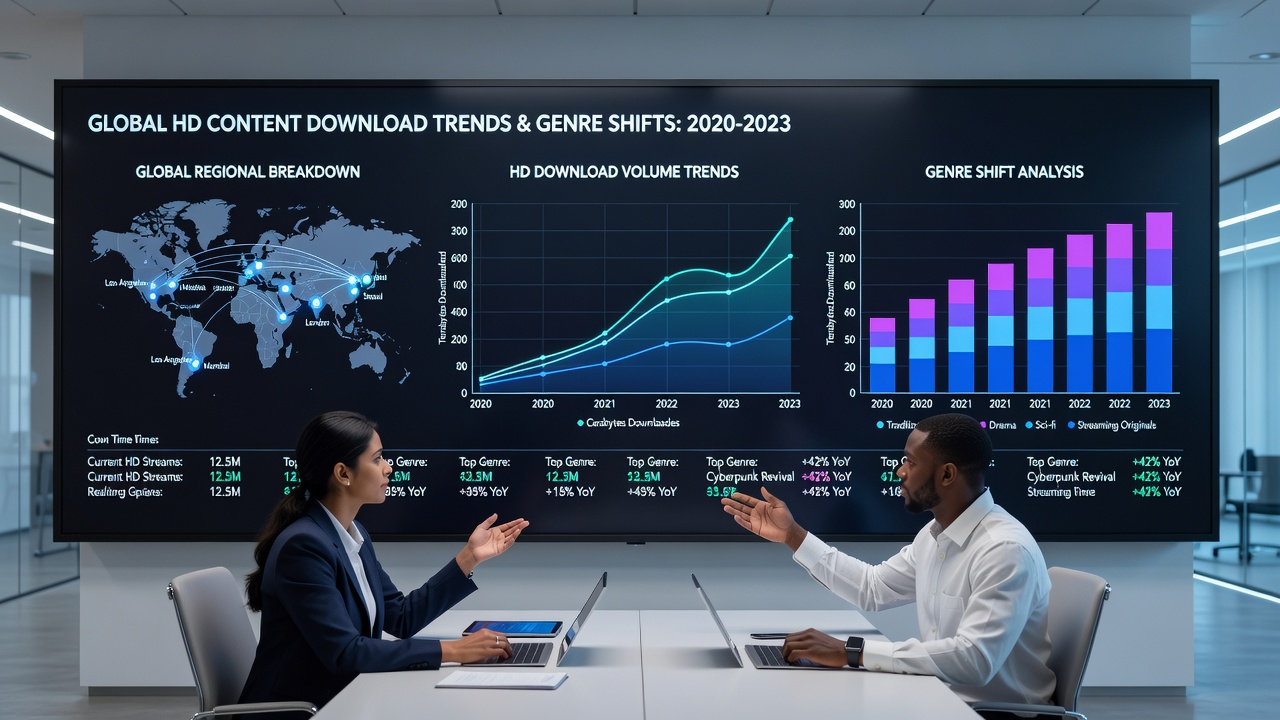
Genre migration appears linked to production trends, as studios allocate greater resources to effects-driven projects that translate effectively to high-definition viewing. Data from university-led media studies in Canada and Australia further shows that younger demographics drive much of the action and science-fiction preference, while older viewer groups maintain broader but less resolution-specific selections. These patterns suggest ongoing alignment between content creation decisions and measurable download behaviors rather than random fluctuations.
Technological and Infrastructure Influences
Advancements in codec efficiency and storage solutions have lowered barriers to HD file management, allowing users to retain larger libraries without proportional increases in device costs. Faster average download speeds recorded across OECD member nations during 2025 contributed directly to the viability of 4K acquisitions, which now represent roughly one-fifth of all HD activity in monitored territories. Mobile network enhancements have also played a role, particularly in regions where fixed broadband remains limited yet cellular data plans support sustained high-bitrate transfers.
Platform policies regarding file quality defaults have shifted in several major services, automatically prioritizing HD options when connection tests confirm adequate bandwidth. Such adjustments align with observed user behavior, where manual selection of lower resolutions has declined steadily since late 2024. Storage media improvements, including higher-capacity solid-state drives at reduced prices, have further supported retention of HD content for repeated viewing without quality loss.
Conclusion
Download trends for high-definition film content reflect measurable intersections of infrastructure development, production priorities, and demographic preferences across global markets through mid-2026. Regional disparities continue to narrow as connectivity improves, while genre distributions show sustained movement toward visually intensive categories. Continued monitoring of these variables will provide clearer indicators of how technological and creative factors shape future consumption patterns in the film sector.