Genre Algorithms at Work: How Categorization Shapes Discovery of Recent Action Titles Across Studio Borders
Xander Lang · May 22, 2026
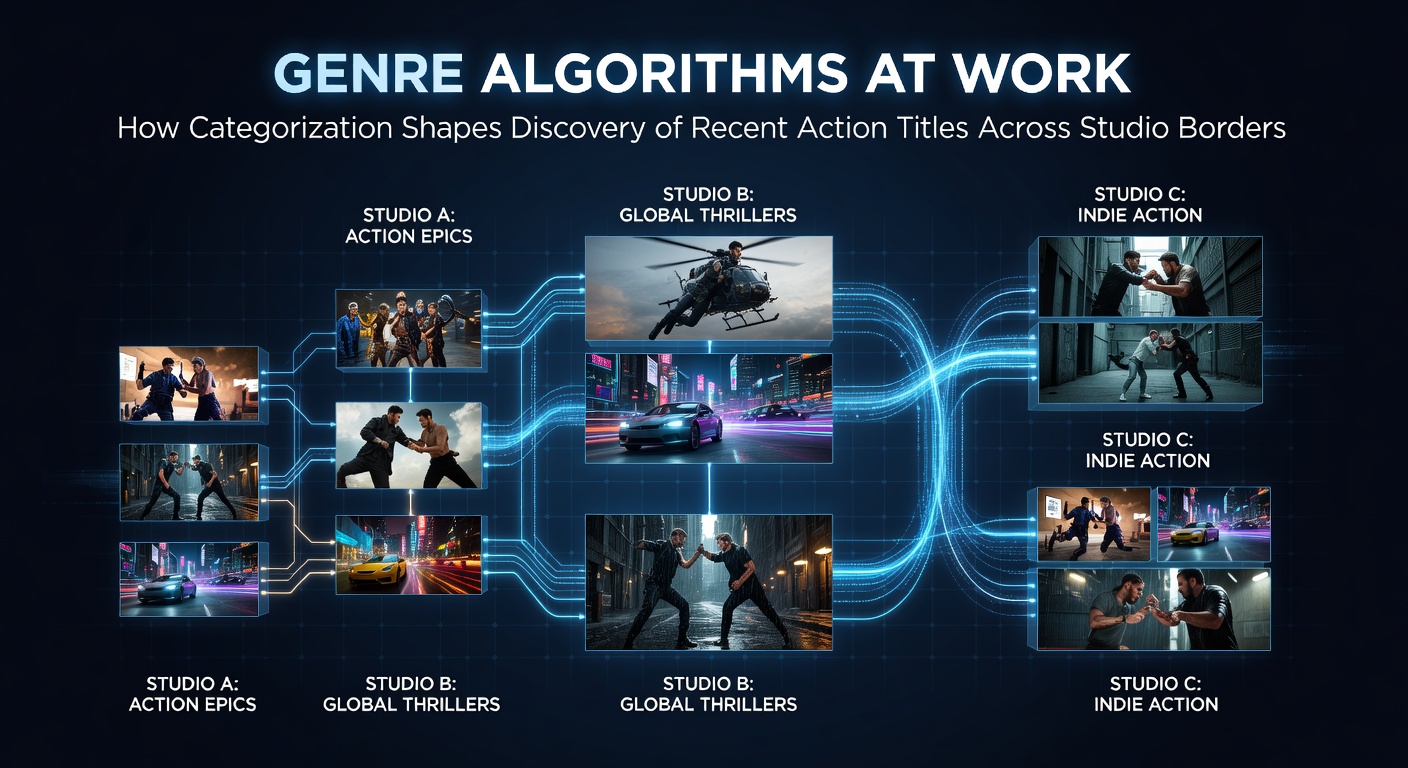
Genre Algorithms at Work: How Categorization Shapes Discovery of Recent Action Titles Across Studio Borders
Streaming services rely on genre algorithms to organize vast libraries of films, and these systems determine which recent action titles surface for viewers searching across studio boundaries. Data from industry analyses shows that categorization processes group movies by shared elements such as fight choreography, narrative pacing, and thematic motifs, yet they also create pathways that connect productions from different regional traditions.
How Algorithms Assign Categories to Action Content
Platforms process metadata including cast lists, director credits, and keyword tags to place titles into action buckets, while machine learning models examine visual patterns like rapid cuts and explosive sequences to refine those placements. Researchers at academic institutions have documented cases where films blending martial arts with high-speed pursuits receive hybrid labels that bridge Hollywood blockbusters and South Asian action exports. This approach allows users browsing one studio's output to encounter titles from another without explicit cross-references.
Classification systems update regularly based on viewer interaction data, and reports indicate that by May 2026 several major services adjusted their models to better handle action hybrids that incorporate elements from multiple cinematic cultures. The adjustments stemmed from observed patterns in search behavior where audiences sought content featuring international stunt teams or collaborative production credits.
Cross-Border Discovery Mechanisms
Once categorized, action titles become discoverable through recommendation engines that prioritize similar metadata matches rather than studio origin alone. Observers note that a viewer who watches a recent Hollywood release featuring elaborate set pieces may receive suggestions for Bollywood productions sharing comparable stunt coordination styles. Studies from media research centers confirm that such connections increase exposure for titles that might otherwise remain siloed by regional marketing campaigns.

Industry organizations tracking global streaming trends have reported that algorithmic pathways account for a measurable share of cross-border views, with action genres showing particularly strong linkage effects. These pathways operate through shared subcategories such as "hand-to-hand combat" or "vehicular sequences," which transcend traditional studio borders and allow newer releases to surface alongside established catalog items.
Impact of Metadata and Preview Integration
Teaser footage and trailer metadata feed directly into categorization engines, supplying additional signals that influence placement within action clusters. According to findings from European media observatories, trailers highlighting international co-productions tend to trigger broader algorithmic distribution because they contain visual cues recognizable across viewer demographics. This process means recent action titles gain visibility in regions where one studio's brand dominates local recommendations.
Platforms also incorporate user-generated tags and watch-time statistics to recalibrate genre boundaries over time. Figures released by research groups focused on digital entertainment reveal that action films crossing studio lines accumulate higher completion rates when algorithms surface them alongside thematically adjacent content from alternate production centers. The result appears in aggregated viewing logs that show increased navigation between Hollywood and Bollywood catalogs without deliberate user intent.
Challenges in Maintaining Consistent Categorization
Discrepancies arise when different services apply divergent classification rules to the same title, and analysts have tracked instances where an action film receives primary placement in one region yet secondary status elsewhere. Such variations affect discovery rates, particularly for releases that blend cultural storytelling approaches with standard action conventions. Data compiled by international trade associations indicates that standardization efforts continue, yet regional preferences still shape how algorithms weight certain attributes.
Viewer feedback loops further modify these systems, allowing platforms to test new subcategory combinations and measure subsequent engagement. Reports from Canadian research initiatives on media consumption highlight that action titles benefit when algorithms expand category definitions to include fusion elements drawn from multiple studio traditions, leading to wider distribution across user profiles.
Conclusion
Genre algorithms continue to influence how recent action titles move between studio ecosystems by establishing shared classification frameworks that prioritize content attributes over geographic origin. As platforms refine these systems through ongoing data analysis, discovery patterns for cross-border releases evolve in measurable ways, shaping audience access to films produced under varied industry conditions.